Show Up to the Audition Like You Already Have the Part [3]
I’ve spent more than a decade waxing philosophical on the state of the entertainment industry, and now I’ve finally gotten all my thoughts in one place. This is the third installment in my series — part one showed where the money in this industry actually goes. It is not gone. Part two examines the industry's favorite excuse, that the audience has disappeared. It has not. The data says otherwise, by tens of millions of people. Together, these two essays essentially make one point: the scarcity you have been told to accept is a story, not a fact.
So, what do you do with that?
The Audition Has Already Started
Most independent filmmakers, musicians, writers, and artists of every kind walk into meetings as someone waiting for permission, mistakenly believing the institution across the table holds all the cards, and that the meeting's only job is to convince them to give you a small piece of it.
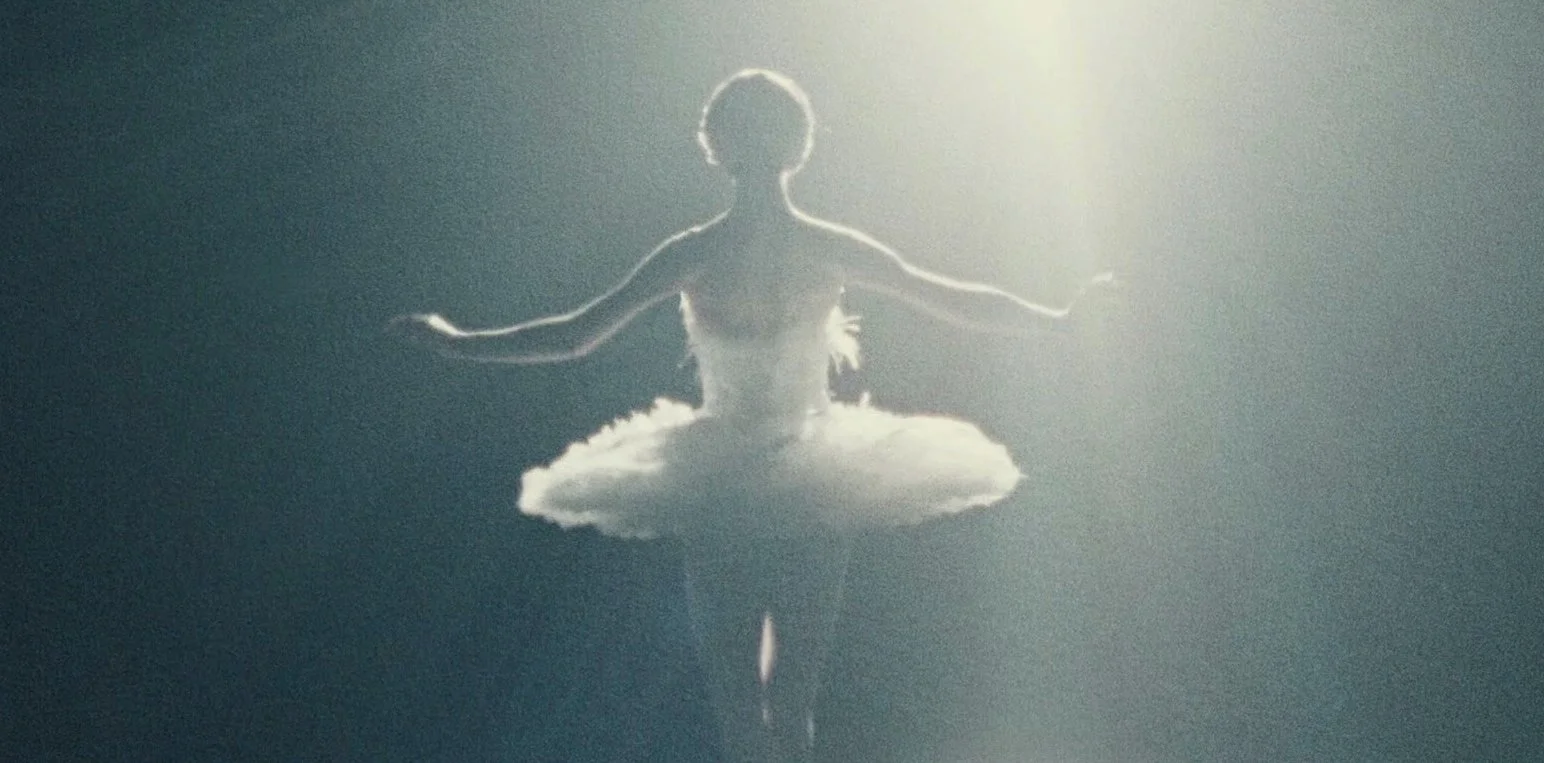
Showing up like you already have the part does not mean pretending. Jason Bateman had a theory on the SmartLess podcast years ago that has stayed with me, something he called “sexy indifference.” He was talking about the idea of walking into an audition knowing you have other opportunities waiting. It’s not fake it until you make it, but a matter of mindset, and truly believing this audition is not the only one.
If you feel like everything weighs on one opportunity, desperation creeps in, and desperation is not a good look in any room.
The Infrastructure Exists Now
Direct-to-audience platforms have made it possible for a filmmaker to release a film to a paying audience without the involvement of a single traditional institution. Substack has made it possible for a writer to build a readership of tens of thousands and generate meaningful revenue from it independently. Bandcamp, before it was acquired and diminished, showed what was possible when musicians were given a clean, direct path to their listeners. The tools are imperfect. The economics are still difficult. None of it replaces the scale that institutional distribution can provide at its best. But the choice is no longer binary in the way it once was. You are not choosing between the system and obscurity. There is a range of paths. Some run directly through institutions. Some work around them. The most successful ones combine both.
That optionality is power. It changes the nature of the conversation you are having when you do walk into the room.
Know Your Number
There is a step that sits between believing the audience exists and actually reaching it, that independent filmmakers often skip at their peril. You have to know who your film is for. Not in the abstract, and not as a demographic on a pitch deck, but with genuine specificity. Who is the person that needs to see this story? Where do they already gather? What do they already watch, read, follow, and pay for? How many of them are there, and what is a realistic estimate of how many you can reach with the resources you have?
These are not creative questions, they’re business questions. For basic market analysis, the industry has historically used comparables, aka “comps,” to decide whether your film is worth the risk. But when you are building outside the traditional system, that analysis is no longer something done to you. It is something you do for yourself, in advance, as a planning instrument rather than a verdict.
Market analysis is almost never about whether your film is good, but rather, is there a sufficient audience for this specific film, at this specific budget, to make the economics of release viable. Those are different questions, and not answering each of them honestly is one of the most expensive mistakes an independent filmmaker can make. A film can be genuinely excellent and still be made at the wrong budget for the audience it is capable of reaching. A film can be commercially well-positioned and still fail because the filmmaker never did the work of understanding who they were making it for.
Budget discipline and audience clarity are the same conversation. If your film costs ten million dollars to make, you need a distribution path that can generate returns at that scale. Your audience might be real but specific: a regional story, a niche genre, a character study without obvious franchise potential. That is not a flaw! It is simply a parameter. It tells you what the film should cost, how it should be released, and what success actually looks like for that particular project.
Know your number before you walk into any room, whether it’s a streaming platform, a festival acquisition conversation, or a direct-to-audience launch. That is not pessimism, it’s the difference between a negotiation and a wish.
The filmmakers who are building sustainable careers outside the traditional system are not the ones making the most ambitious films. They are the ones making films that are precisely ambitious enough for the audience they have actually identified, at a budget that the economics of that audience can genuinely support. That discipline is not a compromise. It is a craft.
NOTE: This series moves between film, music, writing, and fine art throughout, not because the industry is the same in each, but because the underlying math is. Distribution economics, audience math, and the psychology of the audition apply whether the room is a studio, a label, a gallery, etc.
Understanding Your Slate
For years, I consulted for studios, agencies, and producers on these exact problems. How do you build a varied-but-meaningful slate? How do you value the individual projects within it? How do you find new revenue streams while monetizing the ones that already exist? The answer is simple: studios don’t bet everything on one film. They develop a slate, a dozen projects moving at once in different stages, and the good ones do not treat every project the same. They separate the strong from the weak early. They kill projects before those projects cost real money. Self-editing at that level is not a creative failure. It is how the business survives.
Most independent artists build a single idea, attach their identity to it, and carry it for years past the point where it still makes sense. That’s not creative perseverance, it’s a professional mistake.
It’s essential to have more than one idea moving at once, at different stages, so you are developing and executing at the same time. Self-development means doing the studio's job yourself. Which idea is actually ready? Which one has a real audience? Which one you would fund yourself if no one else would? The ideas that fail these questions are not necessarily bad ideas. They are simply not the project for right now, and knowing the difference, without treating the decision as a failure of nerve, is its own kind of craft.
This approach does something else, too. It takes the pressure off any single idea. One idea alone has to carry all the weight, emotionally and financially, but several ideas moving at once spread that weight out, so one project can fail without ending your career.
NOTE: Be mindful of the equity you are putting into your ideas. Apply logic. Understand how much time you are investing, emotionally and financially. Understand the value of the idea and what it is worth in the industry. Understand your burn. This does not mean starting ten things and finishing none of them. Evaluate your ideas. Identify the one with the most real opportunity. Finish it. Then move to the next.
The Greener Pastures Are Not a Fantasy
Part Two of this series ended with the promise that the third part would be about the greener pastures. I want to be honest about what that means and what it does not.
It does not mean easy. It does not mean guaranteed. It does not mean that building something outside the traditional system is without its own costs, its own failures, its own mornings where the path forward is genuinely unclear. The independent route carries its own burdens, and anyone who tells you otherwise is lying.
It means there are filmmakers releasing their own work directly to audiences that are paying for it, returning for more, and telling other people about it. There are musicians who walked away from label structures that were not serving them and built sustainable careers on the loyalty of smaller, more committed audiences. There are writers who chose to own their relationship with their readers rather than route it through institutions that capture the majority of the value. These are not unicorn stories. They are a growing body of evidence that the audience, the one Part Two established is very much still there, will find the work if the work is good and genuinely available to them.
The model is different. The timeline is different. The metrics by which you measure success have to be recalibrated. But the work is the same. The commitment to making something real, something personal, something that could only have come from you, that has not changed. That was never the institution's to give you. It was always yours.
There is something you lose with a great studio partner. A strong institutional partner brings executives who understand story, production, distribution, marketing, and publicity. The burden of a self-distribution model is that you now have to become that expert yourself, across every phase of the business.
When I wanted to become a filmmaker, I wanted to understand every part of the business intimately. I spent over fifteen years working with the best people in the industry, gathering that knowledge one relationship at a time. The ones doing it right bring immeasurable value to a project, and no single person, working alone, replaces all of them. It will serve you well to understand your craft, then learn everything else.
Master your craft first. That part cannot be outsourced or shortcut, and no amount of business knowledge will save a film, an album, a painting, or a book that is not good. But craft alone will not carry you either. Once the work is finished, the rest of the business, distribution, marketing, publicity, deal structure, can be learned well enough to make good decisions, even if you never do it yourself. You will still need a team to fill the gaps you cannot close alone. What matters is knowing exactly where those gaps are. Most artists never study the business with that kind of seriousness because no one ever told them they should. Do it.
The Honest Case for Hope
The creative industries are not ending. They are reorganizing. Reorganizations, however disorienting, create opportunities. The studio system at its peak was built by outsiders who saw a reorganization happening and moved into the space it created. Many of the founders of the major studios were immigrants who had no path into the East Coast film establishment, which was controlled by a patent trust that tried to lock down the entire industry. Instead of fighting for a seat at that table, they moved to California, built their own infrastructure from nothing, and became the establishment the next generation would eventually try to get around. The independent film movement of the ‘90s was born from a reorganization. Every wave of new voices in every creative industry has broken through because something shifted and someone decided to move into the shift rather than wait for it to resolve.
We are in one of those moments.
Final Thought
Know your options. All of them. Explore every path available to you, institutional and independent, and understand the real pros and cons of each before you choose one. Do not choose a path because it is the only one you were presented. The system is not your enemy, and it is not your savior either. Self-distribution is not your savior either. No single path saves anything. The options themselves are the advantage, and knowing all of them is the only strategy that has ever actually worked.
By the Numbers:
Build a slate, not a single idea. Have more than one project moving at different stages at all times.
Match your budget to your audience. A film's cost should be set by what its realistic audience can support, not by ambition alone.
Track your burn. Know exactly what each project is costing you, financially and emotionally, at every stage.
Self-edit early. Move projects that are not ready to the back burner instead of forcing them forward. Develop new ideas regularly, and understand how each one fits into your workflow so it strengthens your slate instead of distracting from it.
Learn enough of the business to navigate it, even if you never run it yourself. Distribution, marketing, publicity, and deal structure take years to master, and most artists never will. What you can do is learn enough to ask the right questions and find the right people in your network to support you where your own knowledge ends.
Understand who your work is actually for. Most artists never answer this clearly. Not a demographic. The actual people, and what share of that audience you can realistically reach and convert.
Use the direct-to-audience tools available now. Substack, blogs, or newsletters for writing, Bandcamp for music, self-distribution platforms for film, hosting platforms for podcasts, and the equivalent in your medium. Learn what they can and cannot do for your specific work.
Build a team for the gaps you cannot close. Know exactly what those gaps are before you look for someone to fill them.
Understand the value of your own work. A mentor once told me something that changed how I think about this permanently. He was describing a house deal, where the previous owners had put millions into renovations and assumed the house was worth millions more because of it. It is not. A house is worth exactly what someone is willing to pay for it. Nothing more. The same is true of your work. What you put into it matters for the work itself, but it does not set the price. The market does.
Map every path before choosing one. The system, self-distribution, and every hybrid between them. The choice matters less than knowing all the choices that exist.
The infrastructure of our industry is changing. The audience is fragmented but present. The tools for reaching them directly are better than they have ever been. The case for owning your work, your relationships, and your creative decisions has never been more legible. The artists who understand this, and who refuse to discount what they are offering, are the ones who will build the next thing worth watching.
The well is not dry. It never was. It is simply a matter of knowing where to dig, and being willing to do it on your own terms.
While the format of these ideas are constructed as essays, they started as my personal observations while navigating the art and film industry. I have been at the crossroads as an artist, a filmmaker, a consultant, a contractor, and an employee; gaining professional experience across every part of the industry this series discusses.
This three-part series was an exercise in taking everything I had been feeling and organizing it into one coherent argument. This is not a soap box! It’s a diary, a story I am telling myself. It is not perfect, but it is a place to start, and I consider these pages living documents that I will update regularly as I grow and learn more.